Why Every Parent Should Get Ear Gear the Moment Their Infant Is Diagnosed With Hearing Loss
A Guide for Newly Diagnosed Families
Hearing your baby’s diagnosis is a moment that changes everything. Suddenly you’re learning new vocabulary — audiogram, decibels, behind-the-ear, mold impressions — and being handed tiny, expensive devices that your child needs to wear during every waking hour to develop speech and language. It’s overwhelming. And one of the very first practical questions you’ll ask is: how do I keep these hearing aids on my baby and keep them safe?
That’s exactly why Ear Gear exists, and why every parent of a newly diagnosed infant should put a set in the diaper bag from day one.
Hearing Aids Only Work When They Stay On
Pediatric audiologists are unanimous on one point: consistent daily wear time is the single biggest predictor of speech and language outcomes for babies with hearing loss. The American Academy of Pediatrics and early intervention programs push for “eyes open, ears on” — every waking hour. But infants pull, drool, sweat, roll, spit up, and explore with their hands. A hearing aid that lives on the floor, in the crib sheets, or worse, in a sibling’s mouth, isn’t doing its job.
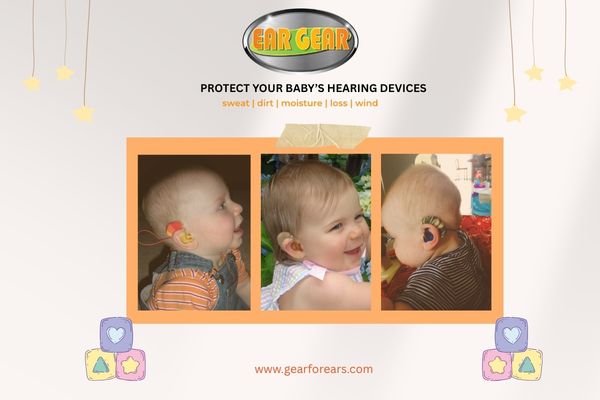
Ear Gear’s snug spandex sleeve holds the device securely against the head and clips to clothing with a safety cord, so when baby tugs, the aid stays attached to the shirt instead of disappearing into the couch cushions.
Replacement Costs Are Brutal — and Rarely Covered
Pediatric hearing aids run $2,000–$6,000 per ear, and most private insurance plans and provincial programs cover replacements only once every several years, if at all. A single lost aid can mean weeks without sound during a critical developmental window, plus a major out-of-pocket hit for the family.
Ear Gear costs a fraction of one appointment co-pay and prevents the two most common loss scenarios for infants: the aid falling out unnoticed in a stroller, car seat, or grocery cart, and the aid being yanked off and dropped.
Moisture, Sweat, and Drool Are Silent Killers
Hearing aids are sensitive electronics worn millimeters from a baby’s scalp — a region that sweats, gets rained on, leaks formula, and meets a teething mouth daily. Moisture damage is the number-one warranty claim on pediatric devices.
Ear Gear’s breathable cover wicks sweat and blocks dirt, drool, and wind before they reach the microphone ports, extending the life of the device and reducing trips back to the audiologist for repairs.
Peace of Mind for Parents Who Already Have Enough to Worry About
Tummy time, feeding schedules, milestone tracking, IFSP meetings, speech therapy, audiology follow-ups — parents of deaf and hard-of-hearing infants carry a heavy mental load. Ear Gear quietly removes one worry: did the aids stay on, stay dry, and stay attached?
It comes in a rainbow of colors so your child can own their hearing technology proudly, and it’s been trusted by audiologists, parents, and adults around the world for nearly two decades.
What Ear Gear Solves at a Glance
• Retention — keeps aids on tiny, active heads
• Loss prevention — safety cord clips to clothing
• Moisture protection — wicks sweat, drool, and rain
• Wind noise reduction — a common trigger for device removal
• Dirt and debris barrier — for tummy time, floor play, and the outdoors
• Comfort — soft spandex that doesn’t interfere with fit or feedback
If your baby was just diagnosed, get Ear Gear before you leave the audiologist’s office.
Protect your hearing device from dirt, sweat, moisture, loss and wind.