
Mitigating Summer Device Failures
A Clinician's Guide to Proactive Patient Asset Protection
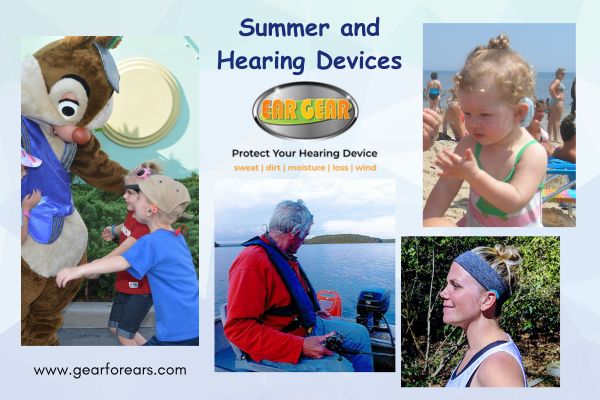
As summer approaches, audiology clinics globally observe a predictable seasonal trend: a surge in urgent, unbilled appointments driven by environmental device degradation. While warmer months expand opportunities for outdoor activities and travel, they simultaneously expose sophisticated digital hearing technology to a hostile range of environmental hazards — from heavy perspiration and ambient humidity to fine particulates and accidental displacement.
For hearing care professionals, these issues transcend simple patient inconvenience. Moisture-induced component failure and accidental loss directly impact clinic workflow, strain manufacturer warranty metrics, and compromise patient satisfaction. By shifting clinical protocols from reactive repair management to proactive device protection, practitioners can safeguard patient investments, reduce administrative burdens, and enhance outcomes. Integrating specialized protective sleeves like Ear Gear into standard patient counseling serves as an evidence-based approach to these chronic seasonal challenges.
The Complex Mechanics of Summer Environmental Stressors
Modern digital hearing devices are marvels of micro-engineering, but their high-impedance circuits remain fundamentally vulnerable to liquid and solid contaminants.
Perspiration and Acidic Corrosion — Human sweat is a complex fluid composed of sodium chloride, trace minerals, and lactic acid. During summer activity, it tracks along the retroauricular space and pools around behind-the-ear devices. Capillary action draws moisture through casing seams and microphone ports, where salt and acidic compounds accelerate corrosion of internal solder joints and battery contacts, leading to intermittent performance or complete circuit failure.
Atmospheric Humidity and Condensation — High humidity creates constant moisture pressure around the device. When patients move from warm, humid outdoor conditions into air-conditioned spaces, the sudden temperature drop can cause moisture to condense inside the device—often settling on sensitive acoustic components. This type of internal moisture buildup is especially challenging to manage.
Micro-Particulate Infiltration — Beaches, hiking trails, and playgrounds introduce fine-grain particles into the wearer's environment. Micro-fine sand can easily lodge within directional microphone ports or mechanical toggles, disrupting polar patterns, degrading speech intelligibility, and rendering user controls inoperable.
Accidental Kinematic Displacement — Active summer recreation substantially increases physical forces exerted on devices. For patients of all ages, any rapid movement frequently results in total device displacement — a financial and emotional trauma that often leads to prolonged non-compliance and auditory deprivation.
Clinical Versatility Across Hearing Technology
A critical limitation of generic protective options is their structural inability to accommodate the vast diversity of modern hearing technology. Ear Gear addresses this with a highly engineered range of custom-fit configurations.
RIC and BTE Instruments — Tiered sizing (Micro under 1", Mini up to 1.25", Original up to 2") ensures a streamlined fit that prevents the fabric from shifting or migrating over receiver wires or sound tube entry points.
Cochlear Implant Processors — Unique designed sleeves surround the processor, offering strong moisture protection while preserving access to cable connections and external controls.
Bone Anchored Hearing Aids (BAHA) — Specialized structural opening allows for a secure fit without applying lateral pressure or creating mechanical interference at the implant connection site while, protecting the external processor housing from dust, rain, and loss.
Single-Unit / Off-the-Ear Processors — Disc-shape designs provide both moisture control and strong loss protection for processors like the Rondo or Kanso.

Material Science: Ingress Protection Without Acoustic Compromise
Creating a physical barrier against moisture and contaminants without degrading acoustic performance requires advanced material science. Ear Gear addresses this through a proprietary double-walled, nylon-spandex blend offering four key clinical advantages.
Proven Acoustic Transparency — Testing shows that the double-walled design allows surrounding sound to pass through with only a 1 dB difference, resulting in acoustic transparency.
Capillary Moisture Absorption — Rather than trapping condensation like an impermeable cover, the spandex fabric functions as a high-efficiency moisture wick, absorbing external sweat and humidity within its outer layers.
Pneumatic Permeability — Zinc-air batteries require a continuous influx of atmospheric oxygen. The porous fabric structure allows constant air exchange, ensuring optimal battery cell chemistry and extending operational runtime.
Wind-Noise Suppression — The double-walled design diffuses turbulent airflow over the microphone port, dramatically reducing wind-induced noise during cycling, golfing, or hiking.
Dual-Layer Retention and Loss Prevention
Catastrophic physical loss is the most immediate summer hazard. Ear Gear offers both Cordless and Corded options, giving clinicians a customizable recommendation strategy based on individual patient risk profiles.
For patients requiring maximum security — infants, pediatric summer campers, active athletes, or seniors in assisted living environments — the corded variant provides an absolute line of defense. A high-elasticity, multi-strand rubber cord connects the protective sleeve to a durable plastic locking clip that attaches firmly to the patient's collar or clothing. If the instrument is displaced during sudden impact or a rapid head turn, it remains safely suspended rather than falling onto the ground, into sand, or underwater.
For patients who wear eyewear throughout the summer, specialized Eyeglass models feature rubber O-rings that slide directly onto glasses stems, anchoring the hearing instrument to the optical frame and preventing lateral displacement.
Clinical Implementation and Practice Management Value
Integrating auxiliary protection into daily clinical workflow delivers measurable operational advantages.
Reduction in Unbilled Service Hours — Proactively dispensing protective sleeves during spring and summer checks significantly reduces emergency moisture-related repair visits, freeing clinic time for higher-margin fittings and diagnostic evaluations.
Enhanced Patient Compliance — When patients are confident their devices are protected, they wear them continuously during outdoor activities, ensuring uninterrupted auditory stimulation and better long-term outcomes.
Ancillary Revenue and Patient Loyalty — Offering clinically verified accessories establishes your practice as a comprehensive care facility, strengthening patient retention and word-of-mouth referrals.
As summer outdoor activities increase, take a proactive approach to protecting your patients' hearing investments. Introduce the Ear Gear Product Line during your upcoming clinical consultations to ensure your patients experience a worry-free, acoustically optimal summer season.